

Financial instruments are banking and financial documents issued by licensed financial institutions to facilitate international trade, project financing, infrastructure development, investment transactions, commodity trading, and contractual obligations.
They provide security, liquidity, payment assurance, and credit enhancement between buyers, sellers, contractors, investors, and financial institutions.
Read more
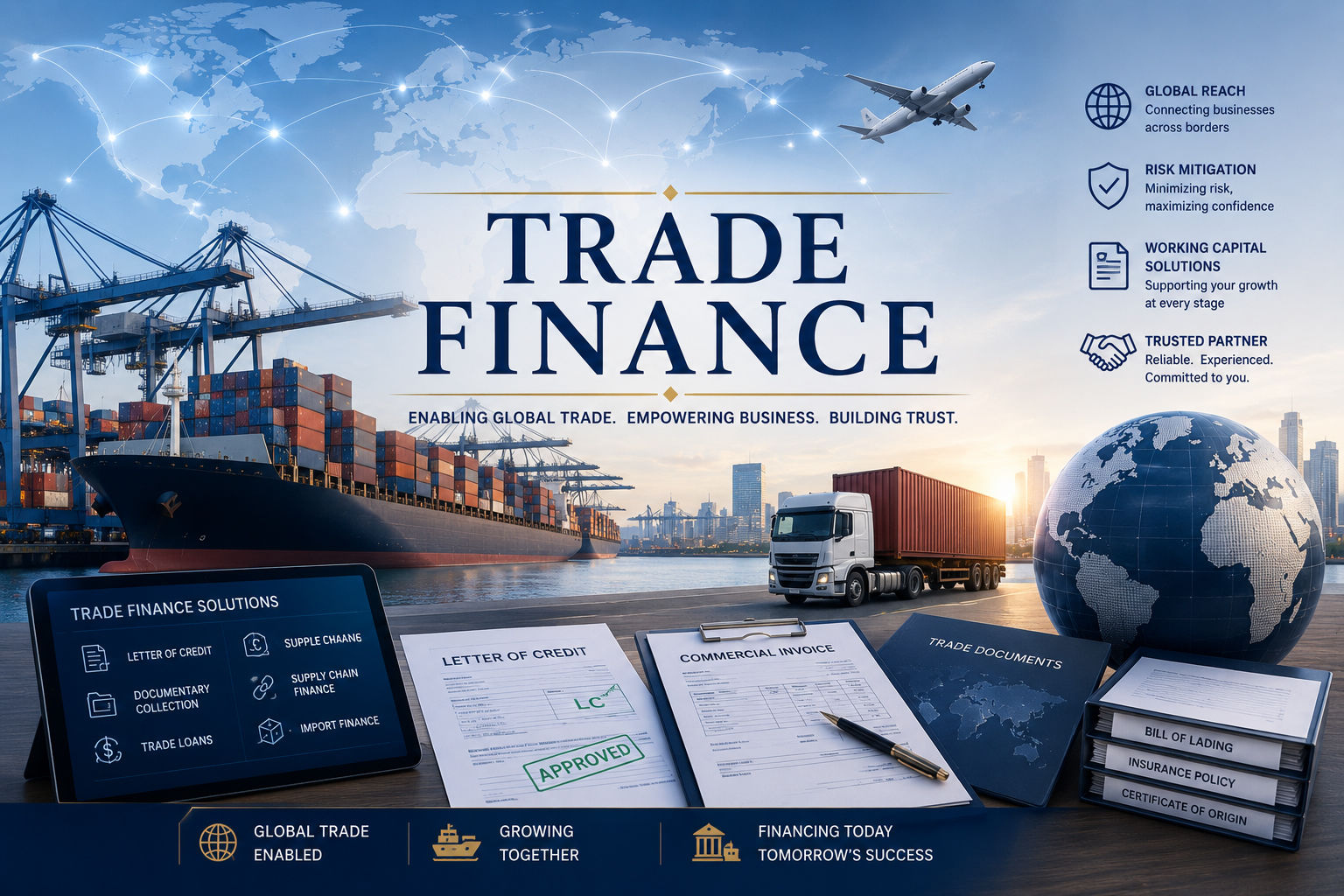
Letter of Credit (LC)
A Letter of Credit (LC) is a financial instrument issued by a bank on behalf of a buyer, guaranteeing payment to a seller provided that the seller complies with all the terms and conditions stipulated in the LC. It is widely used in international trade to reduce payment and delivery risks.
Standby Letter of Credit (SBLC)
A Standby Letter of Credit (SBLC) is a bank guarantee of payment that becomes effective only if the applicant fails to fulfill a contractual or financial obligation. It serves as a secondary payment mechanism and is commonly used as security in trade and project financing transactions.
Read more
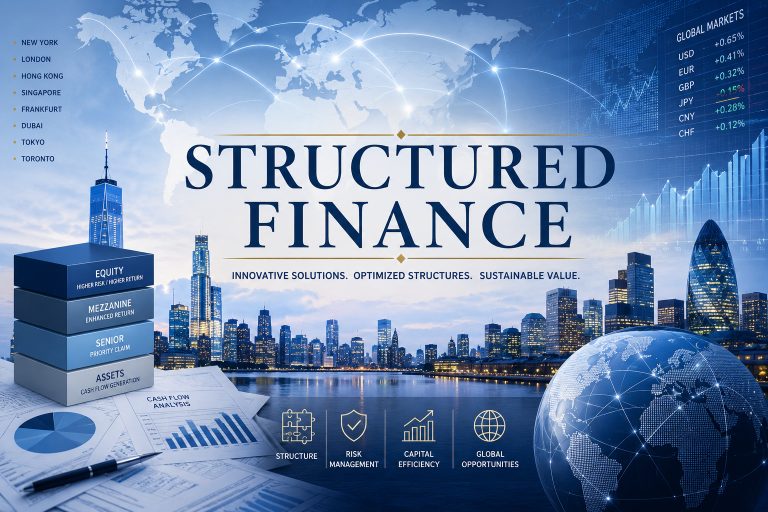
Structured Finance
A specialized financing solution that uses complex financial instruments and customized funding structures to meet unique business, trade, or project financing needs.
Debt Structuring
The process of arranging, restructuring, or optimizing debt obligations to improve repayment terms, cash flow, and financial stability.
Asset-Backed Financing
A financing arrangement where loans or credit facilities are secured by tangible or financial assets such as receivables, inventory, equipment, or real estate.
Read more

Structured Finance
A specialized financing solution that uses complex financial instruments and customized funding structures to meet unique business, trade, or project financing needs.
Debt Structuring
The process of arranging, restructuring, or optimizing debt obligations to improve repayment terms, cash flow, and financial stability.
Asset-Backed Financing
A financing arrangement where loans or credit facilities are secured by tangible or financial assets such as receivables, inventory, equipment, or real estate.
Read more